Vertically Integrated — NABL Tested — 1.8 GW by 2026
Precision at Every Stage
Making a solar module that performs at 24.06% efficiency, survives extreme weather, and ships reliably at scale takes a different kind of operation. At Skkytop, that operation is fully vertical, independently tested, and engineered to grow. From cell processing through final flash testing, every stage of production runs under our control.
This page details exactly how we build, test, and certify every ACE Series module that leaves our facility.
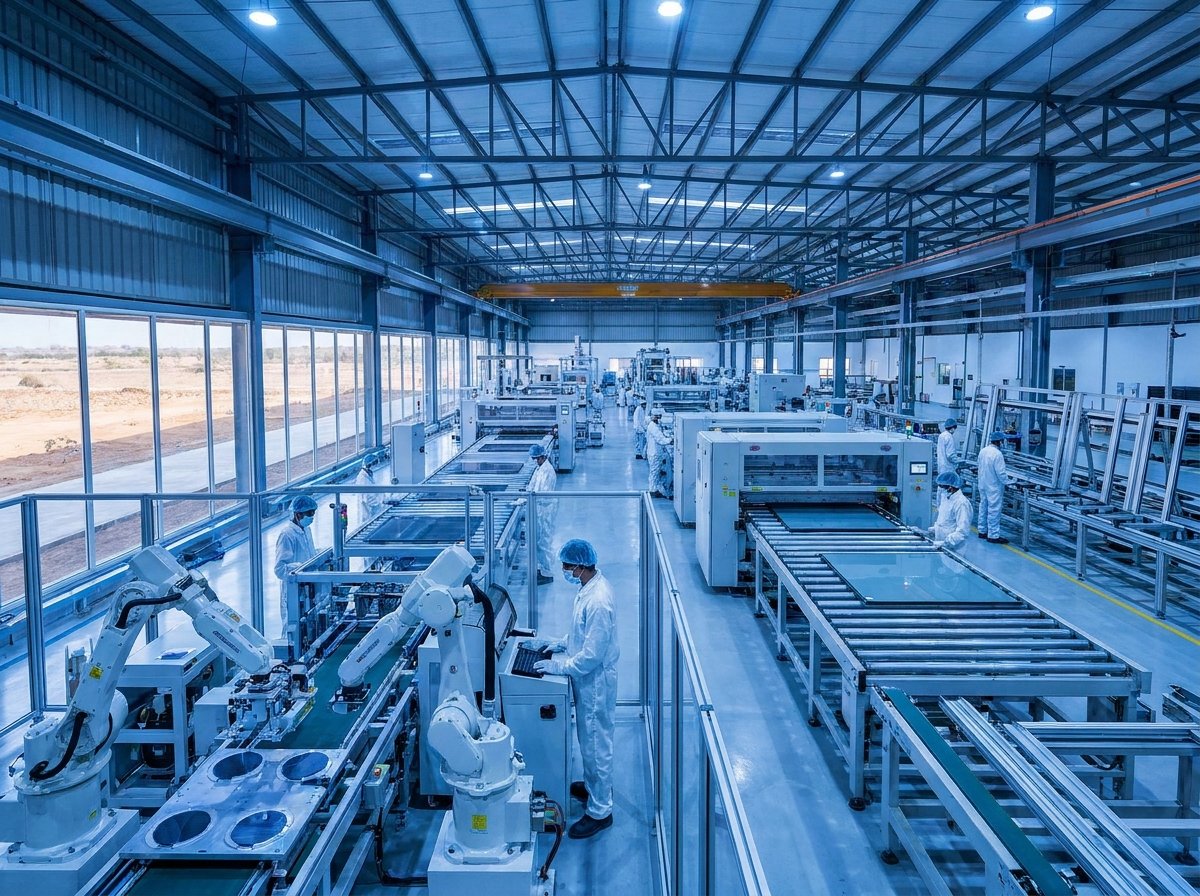
Fully Vertically Integrated: Why It Matters to You
Most solar suppliers assemble modules from components sourced across multiple vendors. When a panel underperforms or fails, tracing the root cause through that chain takes time, generates disputes, and rarely produces a fast resolution. The buyer absorbs that risk.
Skkytop's manufacturing is fully vertically integrated. We control production at every stage, which means we control quality at every stage. There is no third-party cell supplier whose tolerances differ from ours, no outsourced lamination process we cannot audit, and no finger-pointing when a question arises. One manufacturer, one accountability chain, one point of contact.
Vertical integration also compresses lead times. Because we are not waiting on external suppliers to fulfil sub-component orders, we can respond faster to bulk order schedules and customisation requests across the ACE Series wattage range. For EPC companies and developers managing project timelines, that speed is a direct cost benefit.
For buyers in export markets where supply chain unpredictability has historically undermined project delivery, Skkytop's integrated model provides something that matters as much as efficiency ratings: confidence that the modules ordered will arrive on spec, on time.
One manufacturer. One accountability chain. One point of contact — from cell to dispatch.
Quality & Testing Infrastructure
Quality at Skkytop is not a final-stage check. It is built into every production step, with an on-site NABL-accredited testing laboratory providing the independent verification that engineering buyers and institutional procurement teams require.
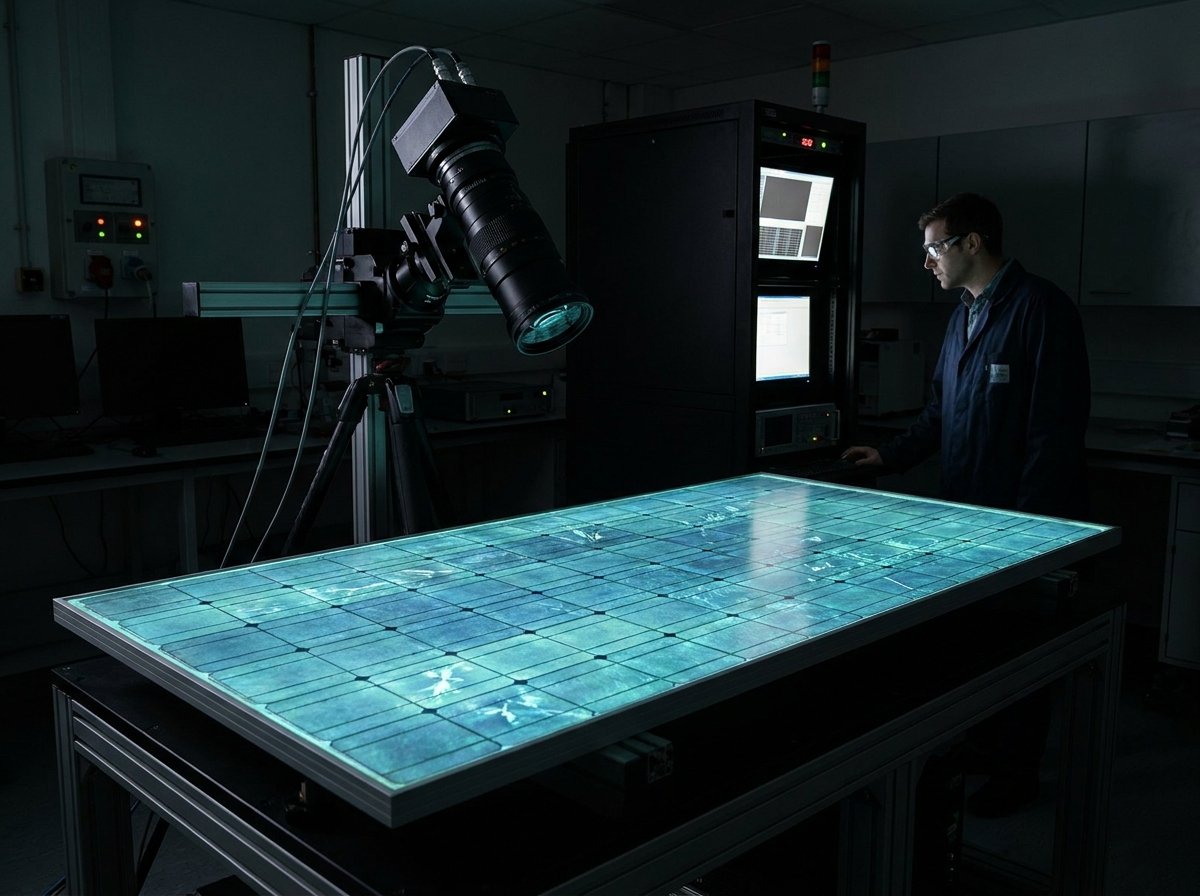
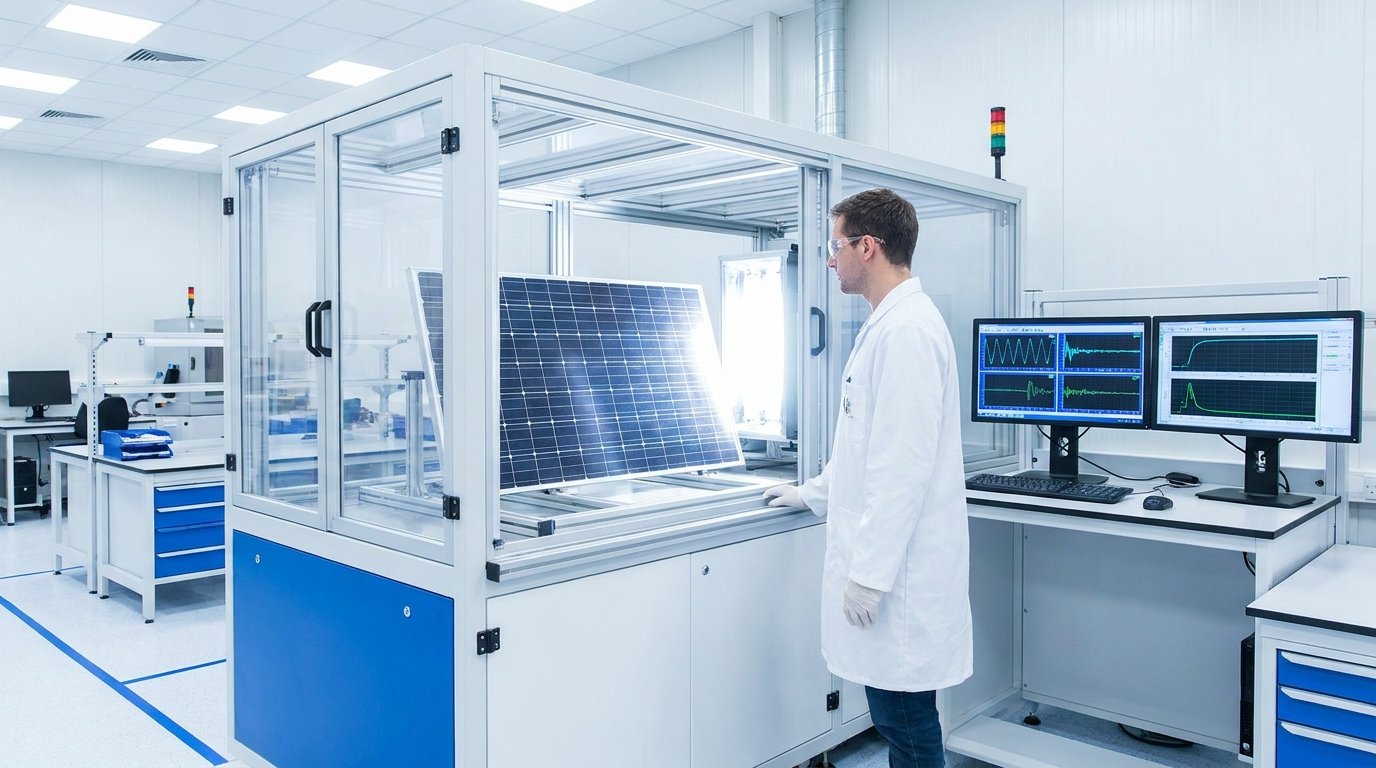
Pre and Post EL Testing
Electroluminescence imaging is applied both before and after lamination to identify micro-cracks and cell-level defects invisible to the naked eye. Only crack-free modules advance through the production line.
Flash Testing for Power Verification
Every module is flash-tested under standard test conditions to confirm actual power output matches rated specifications. Positive power tolerance is guaranteed, so buyers receive modules that meet or exceed the rated wattage on the datasheet.
Current Binning
Modules are sorted and matched by current output to minimise mismatch losses in string configurations. This directly protects system-level energy yield in large installations.
NABL-Accredited On-Site Lab
Our on-site laboratory carries NABL accreditation, the standard recognised across Indian and international quality frameworks. Testing is conducted in-house, not at remote third-party facilities, so results are tied directly to production batches.
Extreme Condition Certification
ACE Series modules are certified for snow loads up to 5400 Pa and wind loads up to 2400 Pa, PID resistance, ammonia and salt mist resistance under IEC standards, and system voltages up to 1500 VDC.
Zero LID on ACE MAX
The ACE MAX range is engineered for zero Light Induced Degradation. First-year degradation is held to 1%, with 0.40% annual degradation thereafter, supporting the 30-year linear performance warranty with figures that hold under real operating conditions.
Capacity Built for Large-Volume Buyers
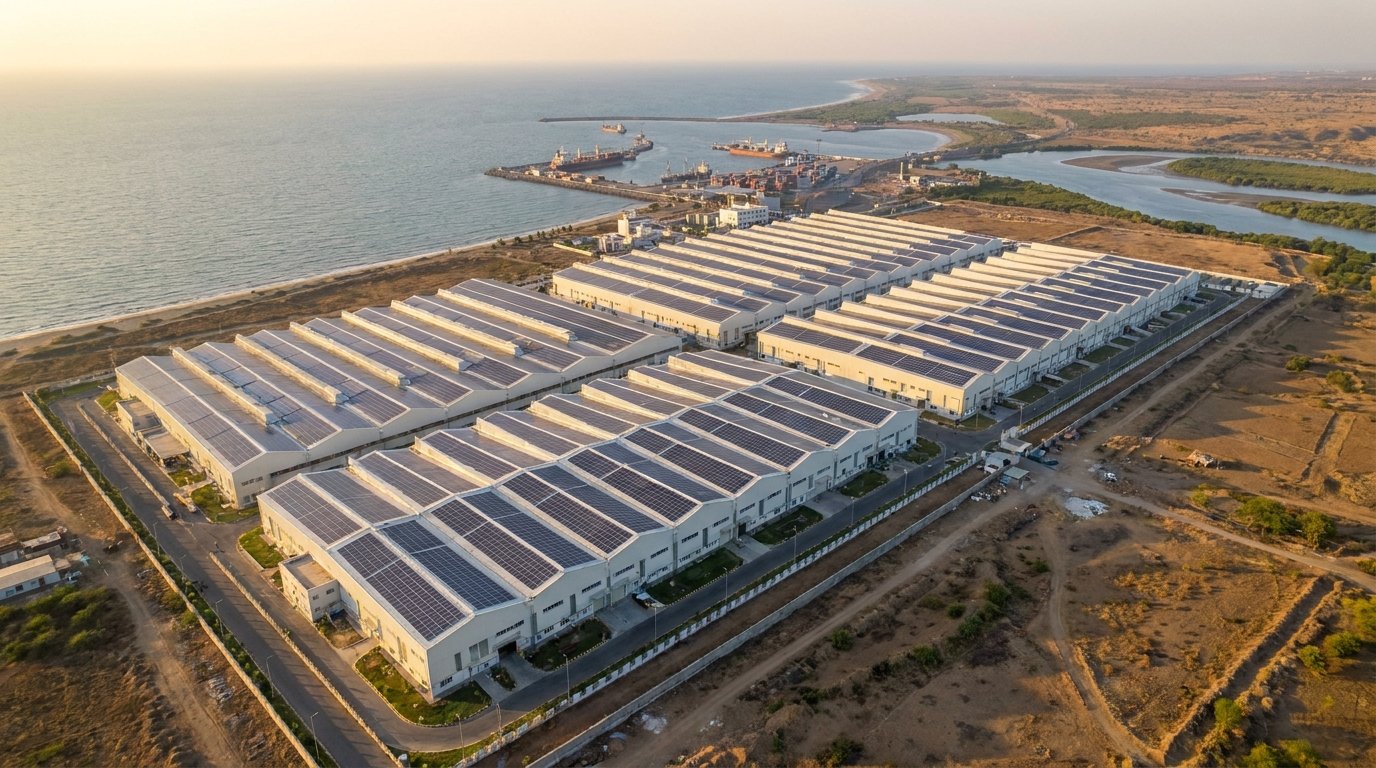
Skkytop's facility is designed for scale from the ground up, with a planned manufacturing capacity of 1.8 GW by 2026. For utility-scale developers, government procurement programmes, and export order buyers managing multi-megawatt pipelines, that trajectory matters as much as today's output figure.
Our location in western India, within close range of major seaports, is a deliberate infrastructure choice. It shortens the logistics chain for export shipments to Africa, Southeast Asia, the Middle East, and Europe, reducing transit time and the port-side handling risks that affect module condition during long-haul freight.
For domestic buyers operating under ALMM requirements or supplying to PM-KUSUM projects, our Make in India manufacturing base means every module qualifies without workarounds or import-dependency concerns.
Manufacturing Responsibly, Not Just Efficiently
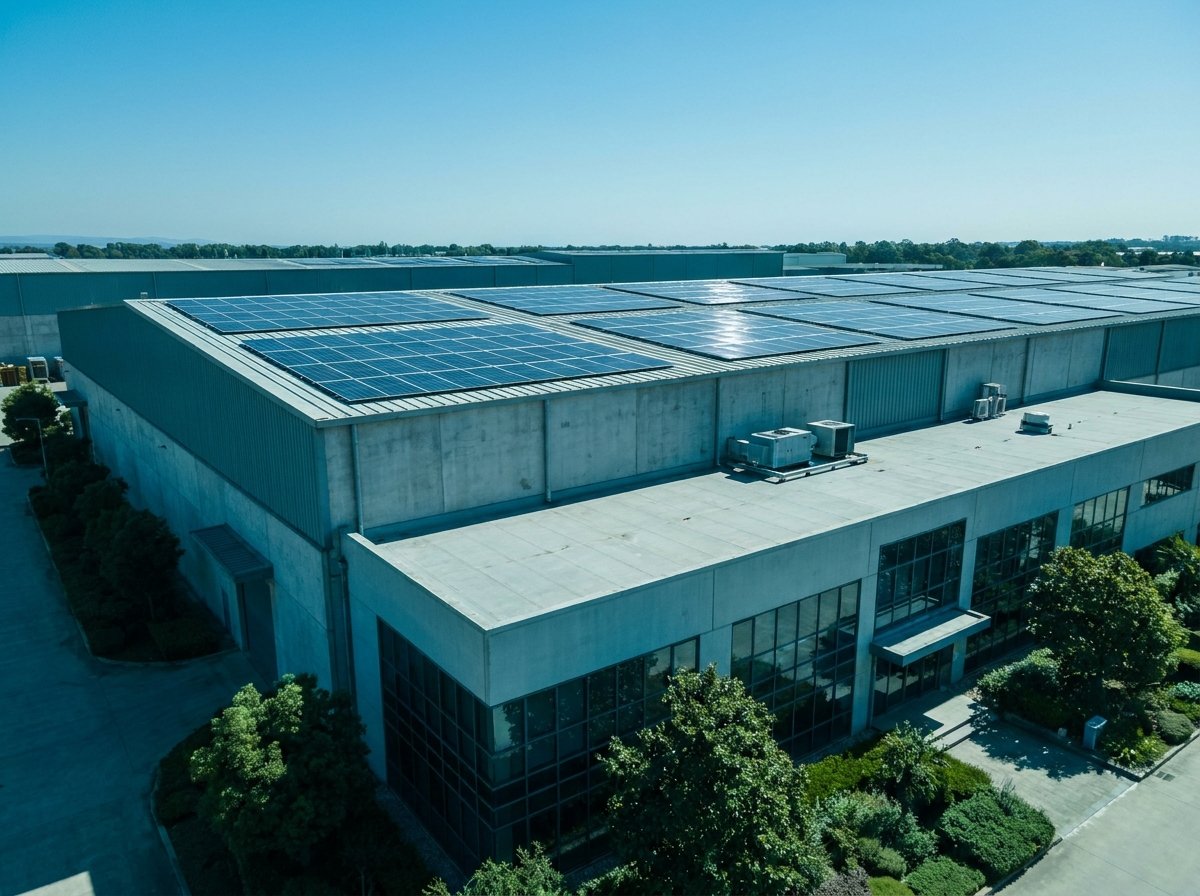
Skkytop's facility operates on solar power. A manufacturer of photovoltaic modules that runs on grid fossil energy carries an obvious contradiction, and we chose to resolve it at the facility level rather than offset it on paper. Our operations are powered by the same technology we produce, which keeps our production energy cost stable and reduces grid dependence.
On packaging, we use fully recyclable materials across the ACE Series dispatch chain. This is relevant for export buyers in markets with extended producer responsibility regulations, and for institutional and government buyers with ESG procurement criteria that extend to supply chain packaging practices. No special handling or disposal costs are passed down to the receiver.
These are operational decisions embedded in how the facility was built, not sustainability claims added retrospectively. For buyers whose project approvals, investor reporting, or government mandates require documented environmental practice from their module supplier, we can provide specifics on request as part of our technical documentation pack.
Certified Across Every Standard That Governs Serious Solar Supply
Every ACE Series module is manufactured and verified against the full set of standards required for Indian government schemes, international project finance, and export market compliance. These are not aspirational targets — they are verified certifications underpinning every shipment.
Get the Technical Detail Behind Every Claim on This Page
If you are evaluating Skkytop for a bulk order, an EPC project specification, or an export procurement programme, the next step is documentation. Request a Factory Overview and Technical Pack to receive full production process detail, test protocol documentation, and certification copies in one file.
Request a Technical Pack or Bulk Quote
Our team responds to procurement and technical enquiries directly. Share your project details and we will come back with the documentation, specifications, or commercial terms you need.