PM-KUSUM · ALMM Certified · BIS Compliant · Made in India
ALMM-Certified Solar Modules for PM-KUSUM and Government Deployment
ALMMListed & Certified
BISIS 14286 Compliant
30 YrLinear Warranty
<0.07%Warranty Claim Rate
Government solar procurement carries requirements that most manufacturers cannot meet end-to-end: ALMM listing, BIS compliance, rigorous quality documentation, and modules built to endure the conditions found across India's rural and semi-urban landscapes. Skkytop Rise Pvt. Ltd. was engineered with exactly these requirements in mind.
Government solar projects in India operate under procurement frameworks that require verified, documented compliance at multiple levels. Skkytop modules meet these requirements across product standards, management systems, and performance testing protocols. Below is a clear account of what we hold, what each certification governs, and why it matters for scheme eligibility and tender qualification.
Mandatory for Govt. Schemes
ALMM Certification
Approved Models and Manufacturers List certification is a mandatory requirement for modules supplied under PM-KUSUM, the CPSU scheme, and other central government solar programmes. ALMM listing confirms that a manufacturer has been assessed by the Ministry of New and Renewable Energy and that their modules meet domestic quality and origin standards. Skkytop ACE Series modules carry ALMM certification, making them eligible for use in government-funded and government-mandated projects without additional qualification steps.
National Standard
BIS Compliance and IS 14286
Bureau of Indian Standards compliance under IS 14286 is a core requirement for solar photovoltaic modules deployed in India. IS 14286 covers design qualification and type approval for crystalline silicon terrestrial modules, ensuring that modules perform reliably under Indian field conditions. BIS-compliant modules demonstrate adherence to nationally recognised safety and performance benchmarks, a prerequisite for public sector and institutional procurement.
International Standards
IEC 61215 and IEC 61730
IEC 61215 covers design qualification and type approval for photovoltaic modules, verifying that modules can withstand long-term outdoor exposure without significant performance loss. IEC 61730 covers safety qualification, confirming that modules are safe to operate in systems connected to public infrastructure and rural electrical networks. Together, these international standards underpin the product reliability that government buyers require for 25-year-plus project lifetimes.
Rural & Coastal Environments
IEC 61701 and IEC 62716 — Salt Mist and Ammonia Resistance
Rural and coastal deployment environments expose modules to salt mist, humidity, and agricultural gases including ammonia. IEC 61701 (salt mist corrosion resistance) and IEC 62716 (ammonia resistance) certifications confirm that Skkytop modules are qualified for the full range of Indian deployment environments, not just controlled urban rooftop conditions. This matters directly for PM-KUSUM projects sited on agricultural or peri-urban land.
Long-Term Yield Protection
IEC 62804 — PID Resistance
Potential Induced Degradation is one of the most common causes of underperformance in large ground-mount systems. IEC 62804 certification confirms that our modules have been tested and qualified for PID resistance, protecting long-term energy yield in high-voltage string configurations typical of utility and rural solar farms.
Structural Assurance
Structural Load Ratings
Skkytop modules are certified to withstand snow loads up to 5400 Pa and wind loads up to 2400 Pa. For rural ground-mount projects across diverse Indian geographies, including cyclone-prone coastal zones and high-altitude regions, these ratings provide the structural assurance that project engineers and government auditors require.
Management Systems
ISO 9001:2015, ISO 14001:2015, ISO 45001:2018
Our management system certifications cover quality management (ISO 9001:2015), environmental management (ISO 14001:2015), and occupational health and safety (ISO 45001:2018). For government procurement processes that evaluate supplier systems alongside product specifications, these certifications demonstrate that Skkytop operates to internationally audited standards across its entire manufacturing and operations chain.
In-House Testing
NABL-Accredited On-Site Testing Lab
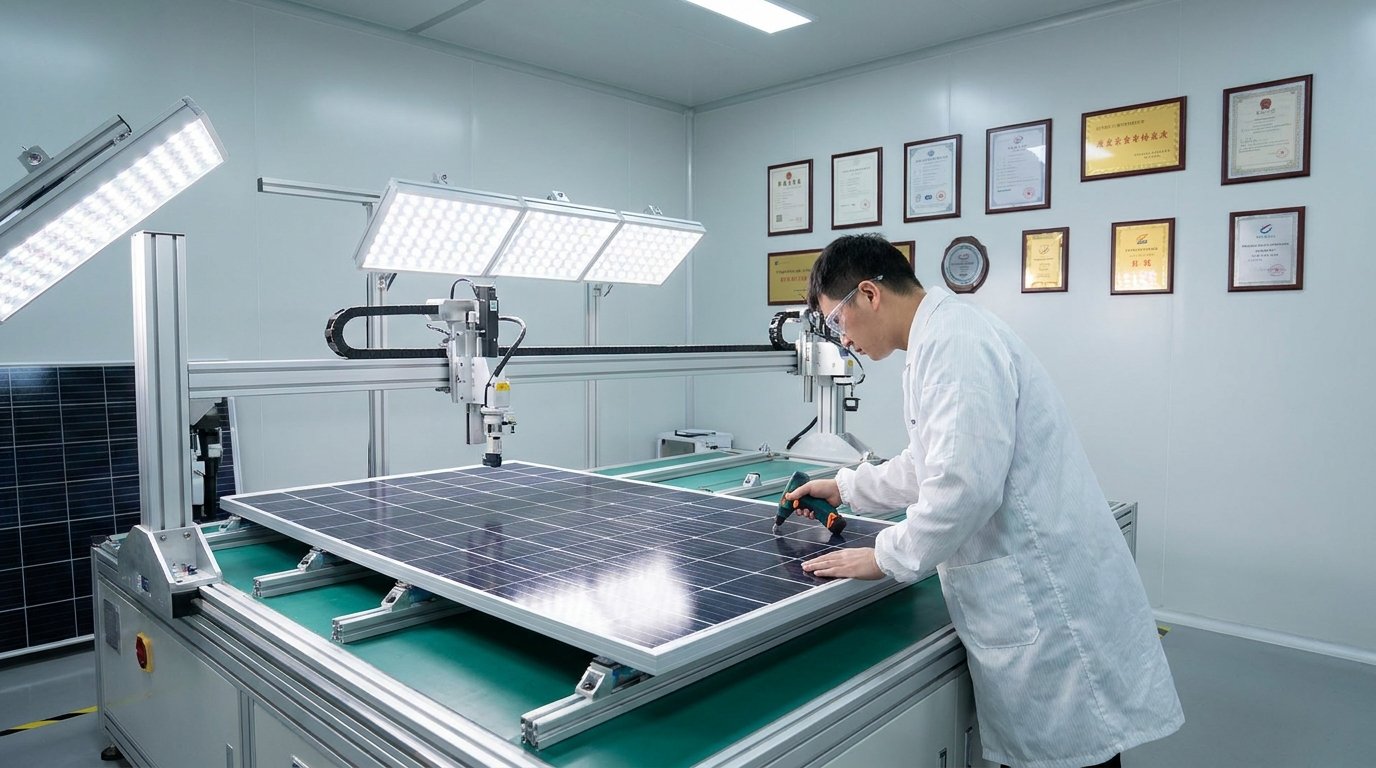
Every production batch is tested in our on-site NABL-accredited laboratory. Flash testing verifies actual power output against rated specifications. Pre and post EL (electroluminescence) imaging detects micro-cracks invisible to the naked eye. This in-house testing infrastructure means that documentation of module quality is generated at the point of manufacture, not outsourced, reducing the risk of batch inconsistency across large government project orders.
Western India — Scaling to 1.8 GW by 2026
Make in India
Indian Manufacturing, Aligned with National Energy Policy
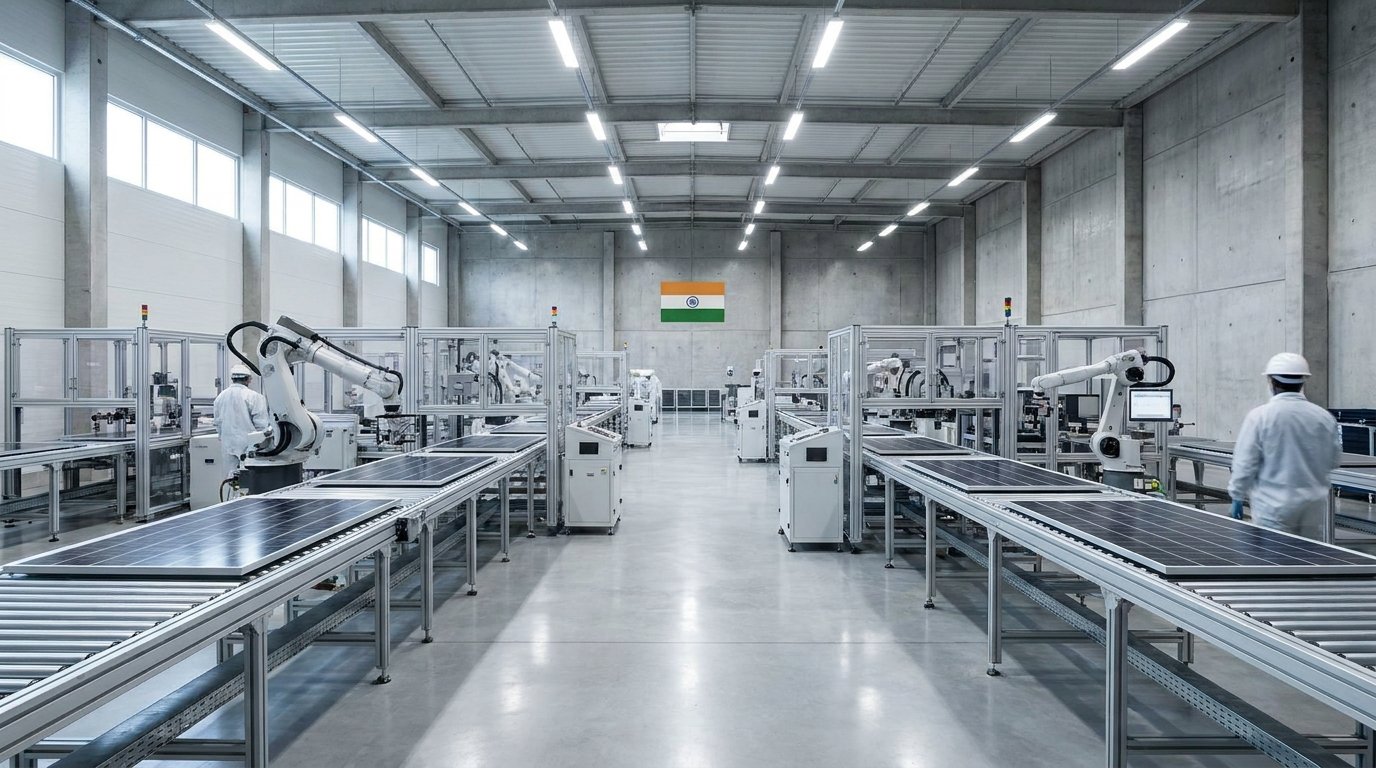
Skkytop Rise Pvt. Ltd. is a fully Indian manufacturer. Our modules are designed, produced, and tested in India, not assembled from imported cells with a local label. This distinction matters for government procurement under schemes that prioritise domestic manufacturing as a condition of eligibility, and it reflects a genuine commitment to India's industrial and energy future rather than a compliance workaround.
Our positioning — Built for Tomorrow's Energy Benchmarks — is not a tagline about aspiration. It is a description of how we make decisions. We invested in N-Type TOPCon technology, fully vertically integrated manufacturing, and an in-house NABL lab because those choices produce better modules over a 30-year project life. The same engineering-first thinking drives our alignment with national policy goals.
Our facility is located in Western India, close to major seaports, giving us supply chain advantages for components while keeping delivery lead times predictable for large domestic orders. We are scaling to 1.8 GW manufacturing capacity by 2026, a milestone that positions Skkytop to serve government project pipelines at the volume that national deployment targets require.
Vertically Integrated
End-to-end domestic manufacturing
Solar-Powered Facility
Operations run on clean energy
Recyclable Packaging
ISO 14001:2015 environmental discipline
1.8 GW Capacity by 2026
Ready for national-scale pipelines
Government Project Enquiries
Submit a Government Project Enquiry
If you are evaluating suppliers for a PM-KUSUM project, preparing a tender response, or managing rural solar deployment at scale, contact our team directly. We can provide full certification documentation, product datasheets, and technical specifications tailored to your project requirements.
Send us your project details, tender requirements, or eligibility questions. Our team responds with full certification documentation and technical specifications within one business day.